
Derek Simmons: The Man Rebuilt from Memory
The Book of MirrorsDerek Simmons’s course from a murder accusation and hospital amnesia through dependence on Joseph Wieder to the recovery of buried memories, a second killing, and arrest.
increasing Bearing strength in each event
 decreasing
Bearing strength in each eventdecreasingA Life Under Accusation
A Life Under Accusation
The evidence against him
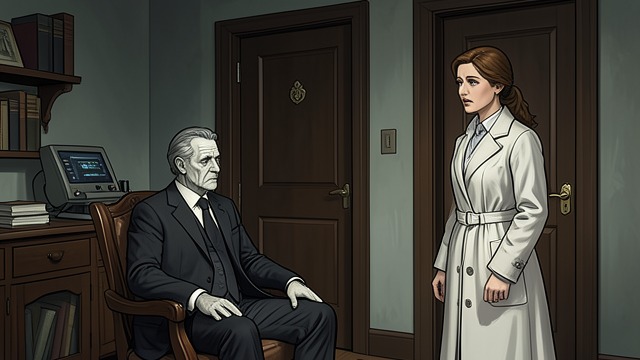
Derek Simmons becomes the principal suspect after his wife, Anne, is found stabbed in their home. Investigators discover her affair, defensive wounds, a missing kitchen knife, and evidence suggesting that Derek could have heard the attack.
Derek denies killing her. His earlier psychiatric diagnosis, however, gives his lawyer grounds to pursue an insanity defense, and Joseph Wieder is among the experts asked to assess his mental state.
Institutional confinement
Wieder concludes that Derek may suffer from a dissociative disorder involving fugue states, rather than the schizophrenia diagnosis he received as a teenager. The court accepts the psychiatric assessment and commits him to Trenton Psychiatric Hospital.
The ruling averts an ordinary murder trial but does not settle what happened to Anne. Derek enters the hospital carrying both an accusation he rejects and an uncertain identity shaped by earlier illness and institutional judgment.
Amnesia and Dependence
Amnesia and Dependence
A lost personal past
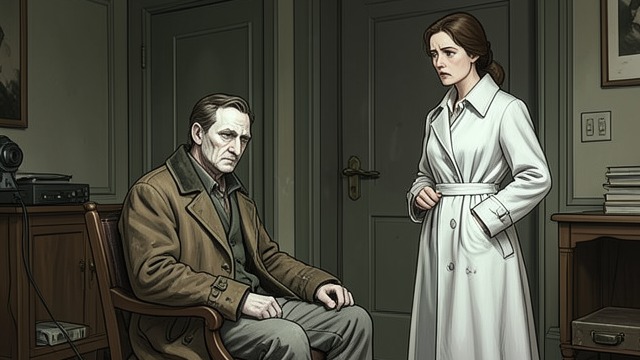
An attack by another patient leaves Derek with a serious head injury and retrograde amnesia. He can form new memories, but his earlier life—including his marriage, education, and the events surrounding Anne’s death—becomes inaccessible.
The loss changes the practical meaning of his innocence. He cannot recover the past well enough to explain it, and those around him must decide what his new condition means for his safety and future.
Wieder’s protection
Joseph Wieder helps Derek move from Trenton to Marlboro Psychiatric Hospital and later supports his release. Derek learns skills and facts about his former life without remembering how he acquired them, while Wieder becomes the person who provides housing, work, treatment, and care.
That dependence gives Derek a stable place outside the institution. It also makes Wieder central to the life Derek reconstructs, so that trust in the professor becomes inseparable from the identity he is learning to inhabit.
The Trusted Handyman
The Trusted Handyman
A reconstructed routine
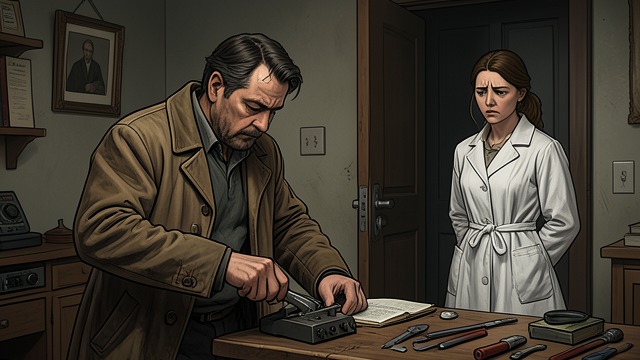
After his release, Derek lives near Wieder’s house and works as its handyman. Wieder pays him, checks that he takes medication, and helps him remain independent despite the loss of his autobiographical memories.
Derek appears gentle and dependable to the people who meet him. He is not merely receiving practical support: he regards Wieder as a benefactor and believes the professor has enabled him to live a decent life.
A hidden vulnerability
The arrangement also leaves Derek close to the professor’s private world. He has access to the house and its routines, while his earlier life remains an unresolved blank even to himself.
That blank is not proof of innocence or guilt, but it creates room for uncertainty. The later revelation that Derek’s memories return makes the apparently settled relationship between patient and protector look far less secure.
Memory Returns, Violence Follows
Memory Returns, Violence Follows
Recognition of a buried past
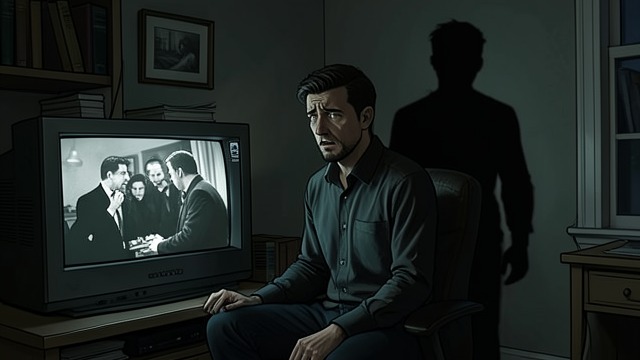
Derek says that a television report about a former coworker triggers memories he had not learned from anyone else. What returns includes the humiliating parts of his life, his marriage to Anne, and his belief that she had been involved with Wieder.
The recovered memories also recast Wieder. Derek no longer sees only the caring doctor who helped him after the hospital attack; he believes the professor kept him close to control a man who might remember the past.
The second killing
On the night of the murder, Derek goes to Wieder’s house and sees Richard Flynn with the professor. He later claims that he returns after Frank Spoel’s attack, finds Wieder badly injured, and delivers a final blow with a leather sap.
Derek’s account makes him responsible for turning a beating into a fatal assault, while his earlier statements and the competing accounts conceal that role. When confronted years later, he admits the killing and is arrested, bringing the hidden violence behind his carefully maintained life into the open.
A Confession and a Second Accusation

A Confession and a Second Accusation
The old story falters
When John Keller and later Roy Freeman revisit the case, Derek repeats a story in which Richard Flynn killed Wieder and Laura Baines was present. That account conflicts with Frank Spoel’s confession and with details in the physical timeline.
Freeman recognizes that Derek has used knowledge tied to an earlier period that he could not plausibly have recovered through ordinary instruction alone. The discrepancy exposes the possibility that Derek’s amnesia had been feigned or that his memories returned much earlier than he admitted.
Exposure and arrest
In their final confrontation, Derek recounts the memories that returned, his resentment toward Wieder, and the moment he struck the injured professor. Freeman also challenges Derek’s account of Anne’s death, which the original case left unresolved.
Police arrive after Derek’s confession, and the man once protected by Wieder is taken into custody. His fate resolves the central question of who delivered the final fatal blow, but leaves the earlier death of Anne and the precise boundaries between true memory and invented explanation unsettled.
1982–1983, after Anne Simmons is found murdered
1983–1985, following Derek Simmons’s hospital attack
1985–1987, after Derek’s release from psychiatric care
1987, from the return of Derek’s memories to the night of Wieder’s murder
Decades after the murder, during Roy Freeman’s renewed investigation
